 打印本文
打印本文  关闭窗口
关闭窗口 拒穿高跟鞋!日本女星发起网上联名获1.9万网友支持(双语)
上班必须脚踩高跟鞋,哪怕脚已经被磨破,你有过这样的经历吗?最近日本一位女星发起了一场反对在职场穿高跟鞋的社交媒体活动,已经有上万女性表达了支持。
A social media campaign against dress codes and expectations that women wear high heels at work has gone viral in Japan, with thousands joining the #KuToo movement.
日本最近兴起一场反对着装规范和职场女性穿高跟鞋的社交媒体运动,成千上万的人加入了了这场#KuToo运动。
dress code:着装规范
Nearly 20,000 women have signed an online petition demanding the government ban companies from requiring female employees to wear high heels on the job - an example of gender discrimination, says Yumi Ishikawa, who started the drive.
近2万名女性在网上签署请愿书,请求政府下令禁止公司要求女员工穿高跟鞋上班,发起这项运动的石川由美说,这种要求是性别歧视。
The #KuToo campaign is a play on the word for shoes, or “kutsu” in Japanese, and “kutsuu” or pain.
“#KuToo”运动的名称来自日文中鞋子(kutsu)和痛苦(kutsuu)谐音。
Ishikawa, a 32-year-old actress and freelance writer, hopes the petition she submitted to the health ministry will lead to changes in the workplace and greater awareness about gender discrimination.
现年32岁的石川由美是一名演员兼自由撰稿人,她希望自己提交给日本厚生劳动省的请愿书能改变工作环境,提高人们对性别歧视的意识。
She launched the campaign after tweeting about being forced to wear high heels for a part-time job at a funeral parlor - and drew an overwhelming response from women.
她在推特上发布了被迫穿高跟鞋在殡仪馆做兼职的消息后,发起了这项活动,并得到了女性的热烈响应。
funeral parlor:殡仪馆
“After work, everyone changes into sneakers or flats,” she wrote in the petition, adding that high heels can cause bunions, blisters and strain the lower back.
她在请愿书中写道:“下班后,每个人都会换上运动鞋或平底鞋”,并补充说,高跟鞋会导致拇囊炎、水疱和下背部拉伤。
“It’s hard to move, you can’t run and your feet hurt. All because of manners,” she wrote, pointing out that men don’t face the same expectations.
她写道:“穿着高跟鞋很难走路,你不能跑,脚会疼。穿高跟鞋都是出于礼仪要求”。她指出,男性不会面临同样的境况。
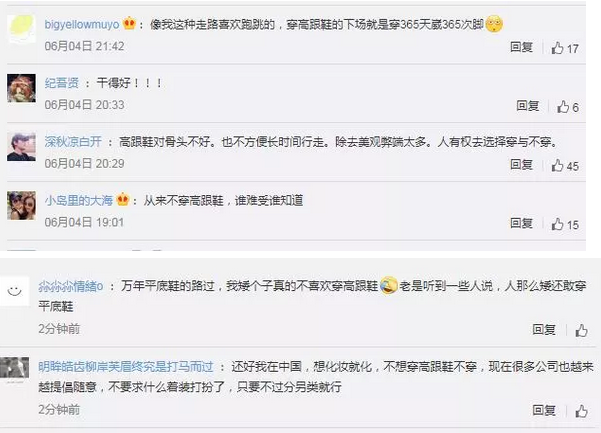
很多国内网友也对这一活动表达了声援:
While many Japanese companies may not explicitly require female employees to wear high heels, many women do so because of tradition and social expectations.
虽然许多日本公司或许没有明确要求女性员工穿高跟鞋,但很多女性这么做是出于传统和社会期望。
打印本文 关闭窗口